Boarding.ai
AI Powered Career Intelligence Platform
Designed and developed a launch-ready AI-powered platform that helps job seekers identify the right opportunities using resume intelligence, AI matching, and personalized career insights.
Overview
Product Overview
Boarding.ai started with a simple observation — most people apply for jobs randomly without understanding whether they are actually a good fit for the role.
I wanted to create an AI-powered platform that could guide users with smarter job recommendations, resume scoring, and career insights instead of relying on blind applications.
This project was completely ideated, branded, designed, refined, and transformed into a launch-ready front-end product within a few hours using a modern AI-assisted workflow.
Problem Statement
Understanding The Market Gap
During the research phase, I identified that many users were spending hours applying for jobs without understanding their actual profile strength or role compatibility.
- Users applied randomly across multiple job portals
- No visibility into resume quality or match percentage
- Candidates struggled to identify missing skills
- Low interview conversion despite high application count
- No personalized AI guidance for career improvement
Product Goals
Product Vision & Goals
- Help users apply smarter instead of applying randomly
- Provide AI-powered resume analysis and scoring
- Improve candidate-job matching accuracy
- Deliver actionable career improvement insights
- Create a launch-ready AI-first product experience
My Contribution
Leadership & AI Workflow Direction
- Product strategy and concept ideation
- Market problem identification
- Branding and logo creation
- AI workflow orchestration
- User journey creation and UX planning
- Prompt engineering for AI design systems
- UI refinement and accessibility improvements
- Front-end product generation support
Step-1
Market Problem Identification
I started by identifying a recurring issue in the hiring ecosystem — candidates were applying for hundreds of jobs without understanding whether their profiles actually matched the role requirements.
- Users lacked visibility into their resume strength
- Job applications were mostly trial and error
- No intelligent recommendation system existed for role matching
- Users needed clearer career improvement guidance
Step-2
Brand Identity & Logo Creation
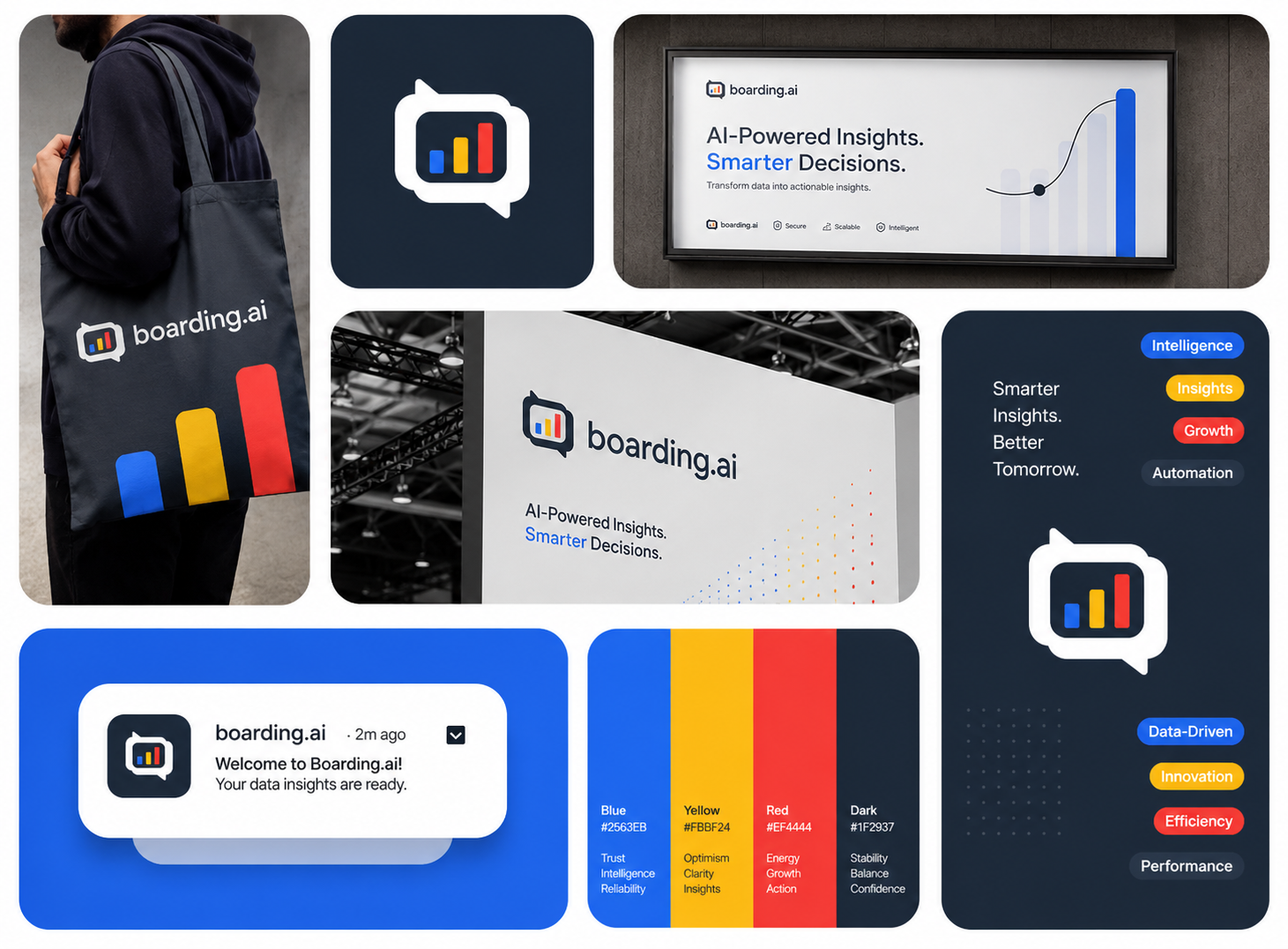
Once the concept was finalized, I started exploring the visual identity for Boarding.ai. I used ChatGPT and Gemini to generate multiple AI-based logo explorations and finalized the branding direction based on the strongest output.
The final logo was generated using ChatGPT image generation workflows and later refined to align with a modern AI-driven career platform aesthetic.
Step-3
AI Assisted User Journey Mapping
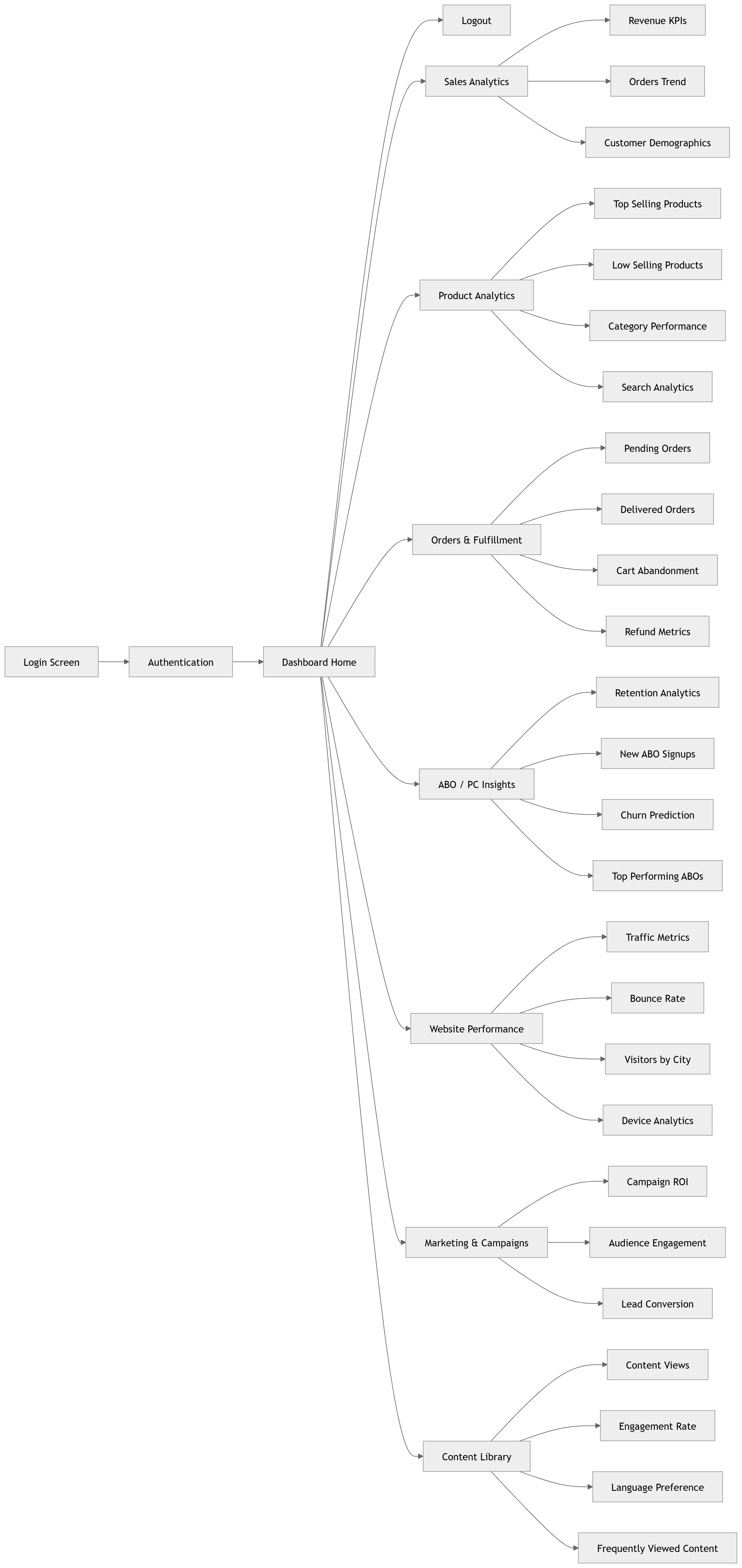
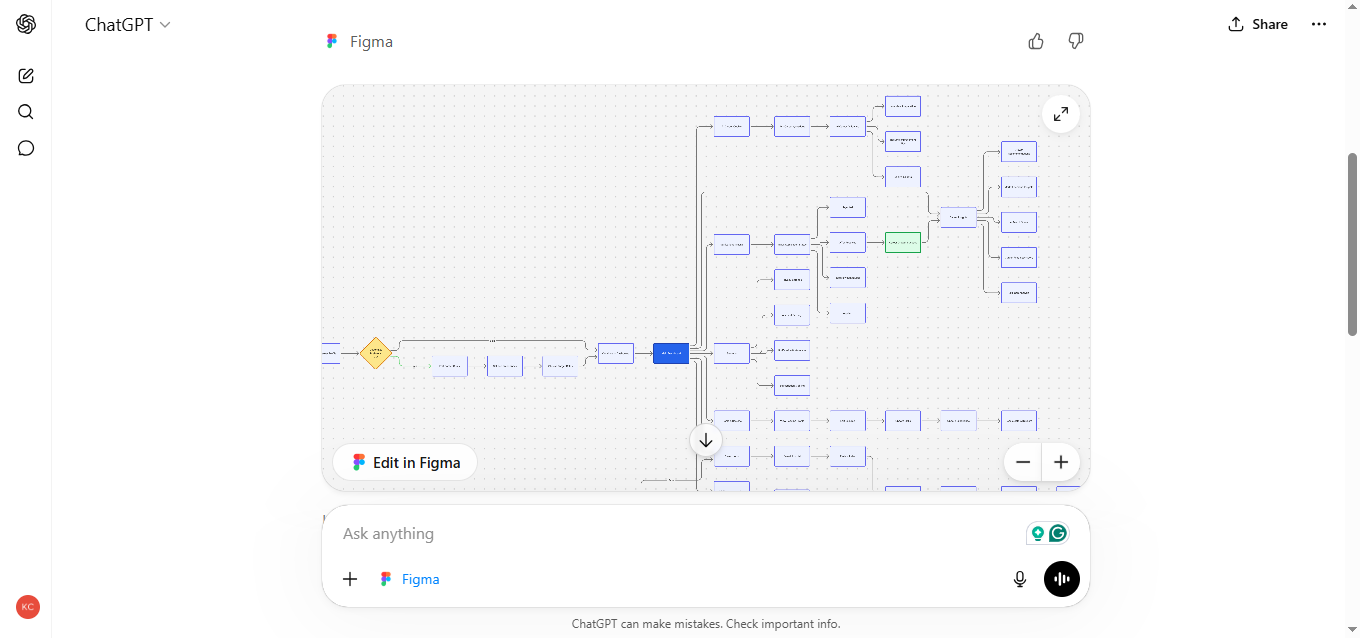
To accelerate the UX planning process, I used ChatGPT connected with Figma MCP to quickly generate the initial user journey flows directly inside FigJam.
After generating the flows, I imported them into Figma and refined the journeys based on real-world hiring scenarios and usability thinking.
Step-4
Wireframe Ideation Using AI
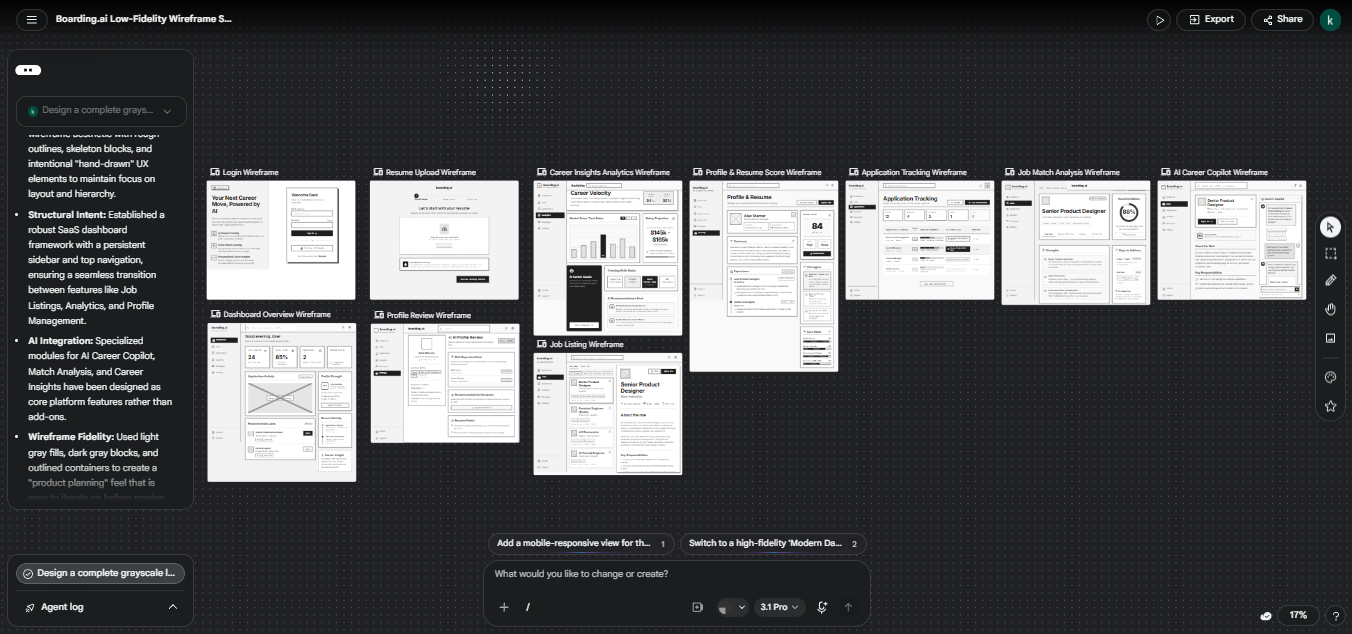
After completing the user journeys, I generated structured prompts using ChatGPT and used those prompts inside Google Stitch to quickly ideate low-fidelity wireframes.
I also experimented with UX Pilot and iterated multiple layout structures before finalizing the core experience direction.
Step-5
High Fidelity UI Generation
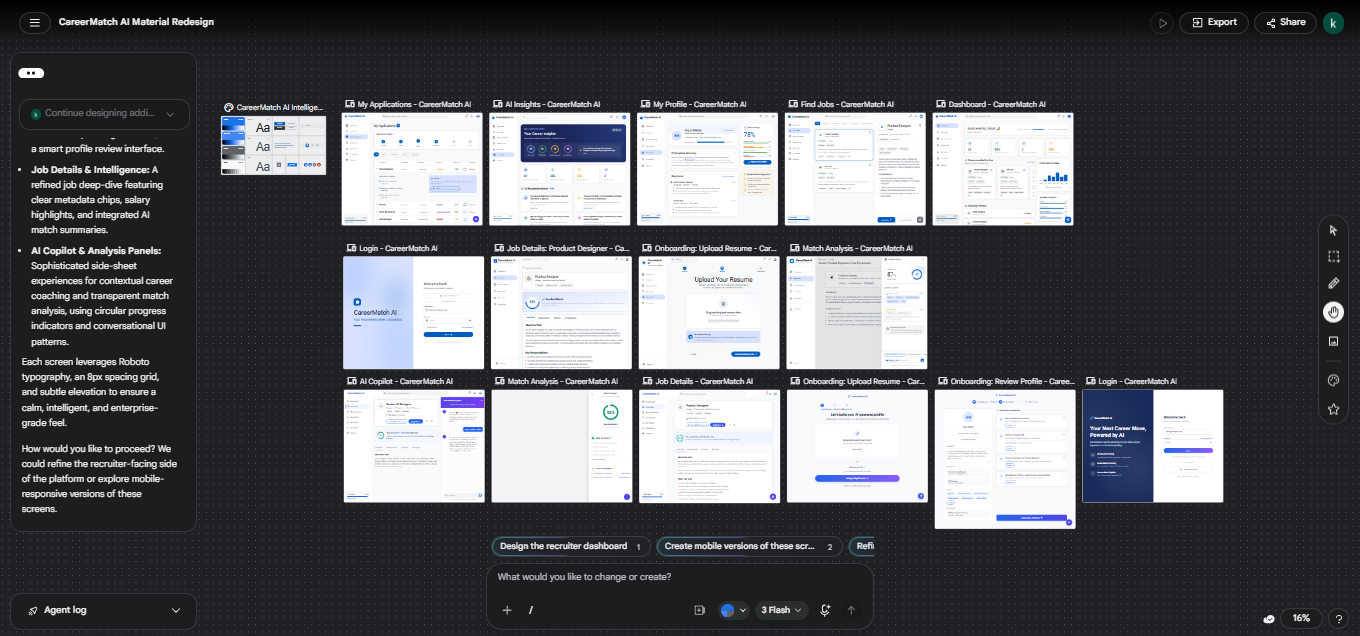
Once the wireframes were validated, I used Google Stitch to generate high-fidelity UI screens following Material Design guidelines and accessibility-focused UX principles.
I attached branding assets, design system references, and structured prompts to ensure the generated output maintained professional product quality.
Step-6
Figma Refinement & Final Polish
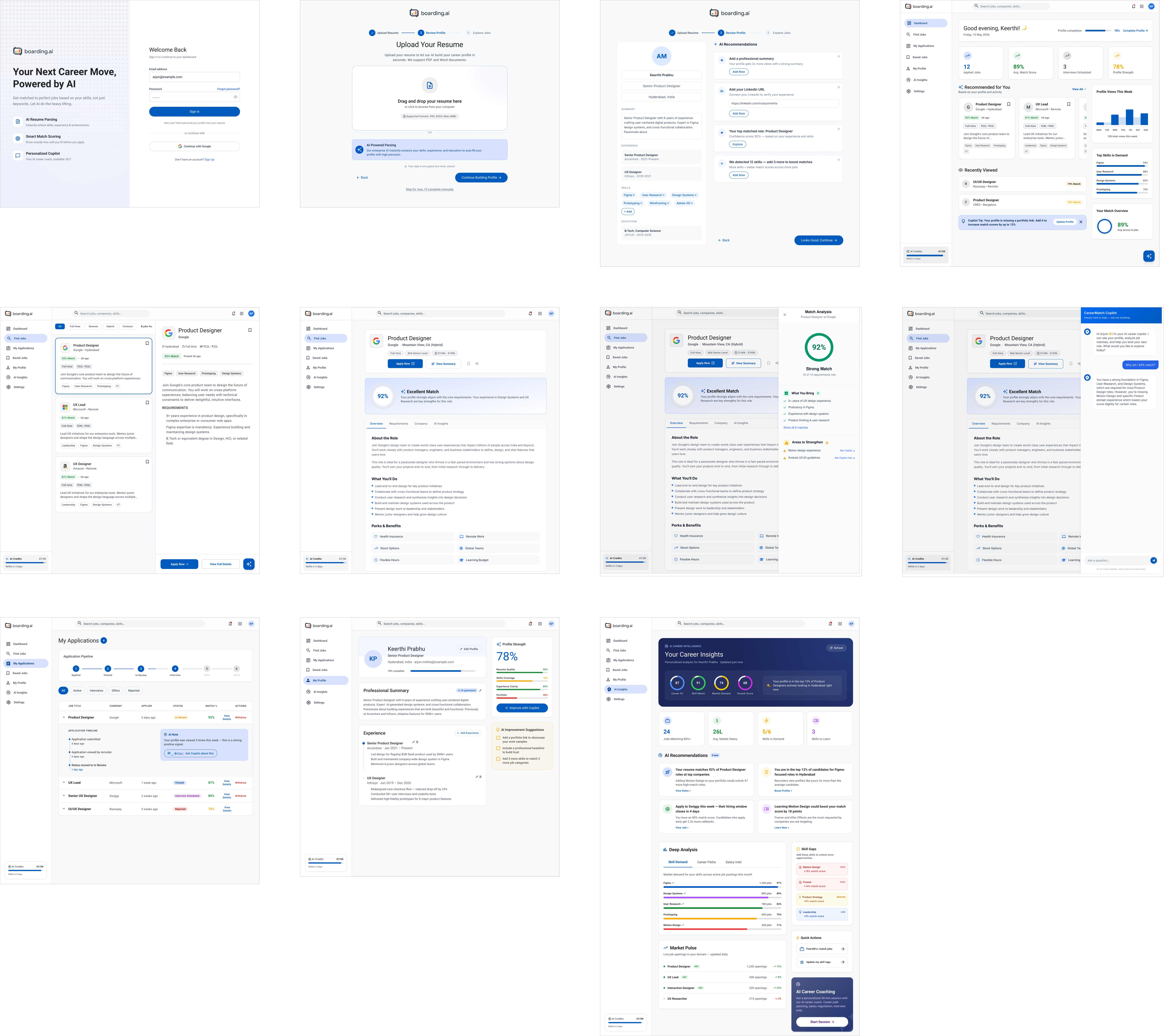
After exporting the generated screens into Figma, I spent around 30–40 minutes refining layouts, fixing spacing issues, correcting typography inconsistencies, and improving visual hierarchy.
- Fixed overlapping UI elements
- Improved typography consistency
- Refined spacing and visual hierarchy
- Improved accessibility and readability
Step-7
Front-End Product Generation
Once the designs were finalized, I generated structured front-end prompts using ChatGPT and used Base44 to transform the UI into a launch-ready front-end product prototype.
Core Features
Product Highlights
- AI Resume Scoring
- Smart Job Matching
- Personalized Career Insights
- Resume Improvement Recommendations
- Application Tracking Dashboard
- AI-Powered Career Analytics
AI Tools Used
AI Assisted Workflow
- ChatGPT + Gemini — Research & Ideation
- ChatGPT + Figma MCP — User Journey Creation
- Google Stitch + UX Pilot — Wireframing & UI Generation
- Figma — Design Refinement
- Base44 — Front-End Product Generation
Impact
Outcome & Results
Using AI-assisted workflows, I was able to move from product ideation to a launch-ready front-end prototype within just a few hours while maintaining strong UX quality and design consistency.
4–5 Hours
End-to-end execution time70%
AI-assisted workflow utilization30%
Human product thinking & refinementLaunch Ready
Front-end product prototypeScalable
AI-first product architectureLearnings
Key Takeaways
- AI accelerates execution but still requires strong product thinking
- Prompt engineering became a major part of the design workflow
- Human refinement is still essential for polished UX quality
- AI tools become more powerful when guided with design systems and accessibility principles
- Modern AI workflows can dramatically reduce product execution timelines